
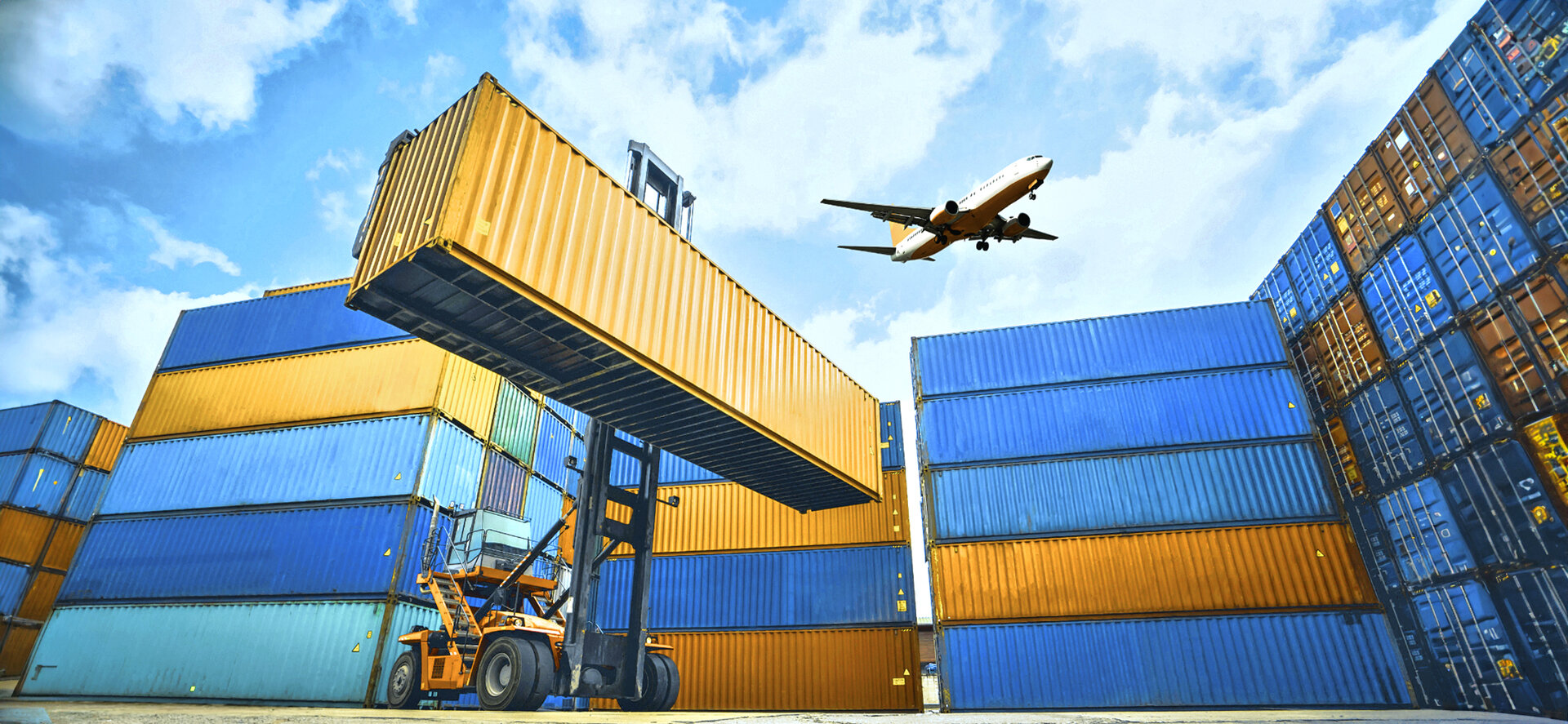




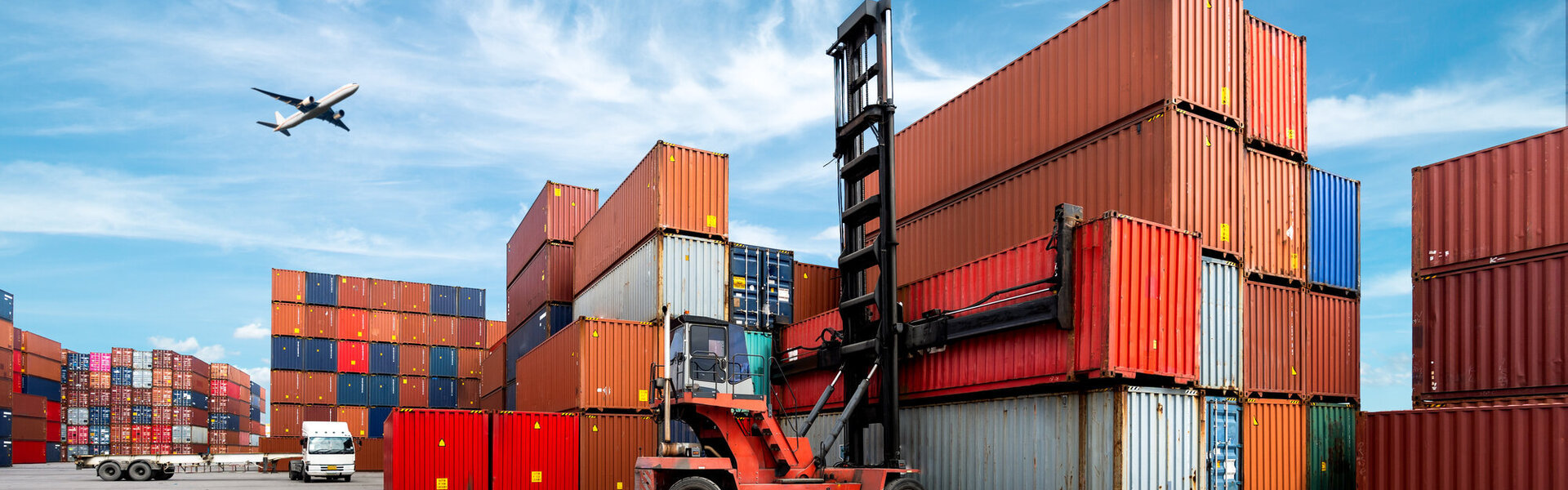
Import or export, by land, air, or sea freight: We monitor your international goods flows and handle administrative processes – such as document and customs clearance. For a seamless global supply chain – national, international, worldwide.
Global supply chain: We are your reliable freight forwarder for air and ocean freight
We deliver your air and ocean freight efficiently and on time. You will be supported by a dedicated point of contact who keeps you informed proactively, and ensures a transparent process throughout. With flexible capacity and strong partner networks, we secure your cargo space – even when the market is under pressure.
Our specialized joint venture
Our Noerpel-NAVIS joint venture combines our logistics solutions in Germany, Austria, and Switzerland with the international expertise of our Hamburg-based partner. This allows you to benefit from a robust network and global transport solutions: cost-effective by sea or via air freight when speed is of the essence.
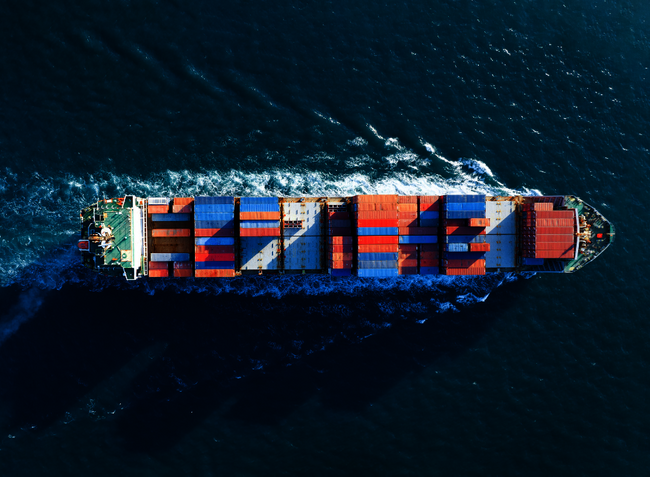
Whether FCL or LCL – we ship your shipments safely by sea
Whether it’s a single piece of cargo, a partial load, or the shipment of a full container: We deliver your goods safely and on time to any destination via any port of your choice – worldwide and with years of experience in sea freight.
Through fixed bookings on key maritime trade routes, we secure reliable cargo space for you – even during periods of high demand. With modern IT systems and your personal point of contact, we ensure full transparency and seamless transport from customs clearance to shipment tracking.

Complete air freight service from a single source
Whether it’s a time-sensitive shipment or a complex transport requirement: With our air freight service, we deliver your goods reliably and cost-effectively to their destination. End-to-end transport monitoring by your personal point of contact, along with proactive updates, enhance the security of your shipment and ensure maximum transparency.
We advise you on all relevant conditions – such as customs regulations and transport insurance, and handle the preparation of all necessary documentation. This way, you receive your customized air cargo solution – flexible, secure, and from a single source.

For regular commercial goods, in cartons, on pallets, or in crates, standard closed containers with standardized container sizes such as 20 or 40 feet are used in sea freight. For handling oversized packages, we also ship for you in other container types.
A distinction is made between the following types:
DV – Dry Van: Box container/closed standard container
HC – High Cube Container: Box container/closed standard container with increased height for greater volume – particularly for light, bulky goods
OT – Open Top Container: a standard container with an open roof or covered by a tarpaulin. Particularly bulky/oversized packages can be loaded here.
FR – Flat-Rack Container: the container has fixed or foldable end walls – but no side walls and no roof. Particularly suitable for bulky, oversized, and heavy goods
The most common container types are:
| Internal dimensions (mm) | Loading spaces (Euro pallets) | Payload (in to) | Volume (m³) | Special features | |||
| Container type | Length | Width | Height | ||||
| 20-foot DV | 5890 | 2340 | 2380 | 11 | 28 | 33 | - |
| 20-foot OT | 5300 - 5330 | 2200 | 2315 - 2388 | - | 28 | 33 | Crane loading |
| 20-foot FR | 5650 | 2400 | 2233 | - | 27.5 | 33 | Oversize width/height |
| 20-foot refrigerated container | 5450 | 2260 - 2280 | 2200 - 2250 | - | 26.5 (rail) 22.5 (HGV) | Temperature-controlled transport. Exclusively by HGV. | |
| 40-foot DV | 12020 | 2340 | 2380 | 23 | 26.7 | 67 | - |
| 40-foot HC | 12020 | 2340 | 2697 | 23 | 26 - 28 | 76 | - |
| 40-foot OT | 1135 - 1140 | 2200 | 2315 - 2388 | - | 26 - 28 | 67 | Crane loading |
| 40-foot FR | 12020 | 2226 | 2245 | - | 26 | 65 | Oversize width/height |
| 40-foot refrigerated container | 11700 | 2320 / 2240 - 2280 | 2180 | - | 26 | Temperature-controlled transport. Exclusively by HGV. | |
All payload values apply only to the rail/truck combination to the nearest rail depot, not for road transport to the port.
The use and availability of transport units vary by route. Dimensions may vary by manufacturer and model series. Payload and maximum load capacity depend on the route, equipment, and mode of transport.
We would be happy to advise you on selecting the right container for your goods.
For ocean freight, the CTU Packing Guidelines (Code of Practice for Packing of Cargo Transport Units) and national regulations apply, in particular.
The most important principles of the CTU Packing Guidelines:
- Packaging design: The packaging must be suitable for transport conditions – i.e., withstand sources of impact, vibrations, moisture, and temperature fluctuations.
- Load securing: The cargo must be secured against slipping, tipping over, and falling out – especially toward the door side of the container.
- Stowage: Empty spaces must be avoided or filled with suitable materials. Lashing points and securing aids such as straps, wedges, or nets must be used.
Packaging requirements:
- The packaging must be appropriate for the weight, shape, and sensitivity of the goods.
- Additional requirements must be observed for export packaging, e.g., IPPC marking for wooden packaging.
- Separate regulations apply to dangerous goods in accordance with the IMDG Code.
We would be happy to advise you on load securing and packaging your goods for international shipping.
Strict regulations regarding load securing and packaging apply to air freight – particularly those from IATA, the German Federal Aviation Authority (LBA), and the respective airlines. The goal is maximum safety, tamper-proofing, and protection during transport.
The IATA DGR governs the safe transport of dangerous goods by air freight worldwide:
- Types of packaging and materials
- Marking and labeling
- Documentation and safety certificates
- Permitted quantities and packaging combinations
IATA recommendations for packaging safety and load securing also apply to non-dangerous goods.
Requirements of the German Federal Aviation Authority (LBA)
- Tamper-proof packaging: Shipments must be packaged in such a way that any unnoticed opening becomes immediately visible.
- Robust outer packaging: Cardboard boxes and crates must be sturdy enough to withstand handling operations and aircraft movements.
- Security checks: Packaging is regularly inspected by ground handling service providers and the LBA. Non-compliant packaging can lead to delays and additional costs.
General packaging requirements
- Packaging suitable for the intended use: Protection against sources of impact, vibrations, pressure differences, and temperature fluctuations.
- Internal padding: Use of bubble wrap, foam, edge protectors, or wooden inserts.
- Labeling: Clear information regarding recipient, sender, weight, handling instructions, and, if applicable, hazardous materials labeling.


