

- The report covers the years 2022 and 2023.
- Energy-saving measures and the transition to green electricity are already delivering results.
- Voluntary reporting ahead of future CSRD requirements
The Noerpel Group has published its first sustainability report, providing a comprehensive analysis of key sustainability indicators for 2022 and 2023. In doing so, the company is taking a proactive approach to sustainability reporting, ahead of the requirements set out in the Corporate Sustainability Reporting Directive (CSRD). The Group has set itself the goal of achieving greenhouse gas neutrality by 2050.
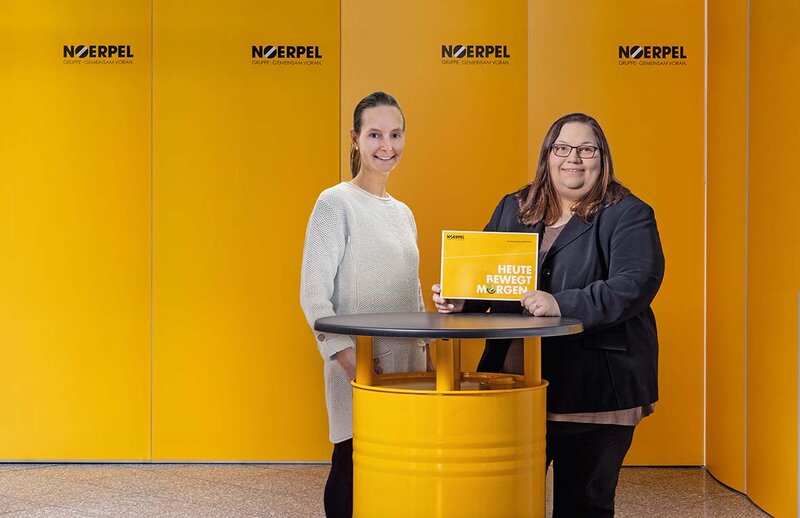
Under the CSRD, the Noerpel Group will not be required to report on its sustainability performance until 2026 for the preceding financial year. Nevertheless, the newly published report already documents key company and supply-chain metrics. 'Only by understanding where we stand today can we define reliable targets and implement the measures needed to achieve them,' said Viktoria Wessel, Sustainability Manager at the Noerpel Group. 'The baseline data we have collected creates transparency and enables meaningful comparison.' The report was prepared in accordance with the internationally recognised Global Reporting Initiative (GRI) standards. >> read more
The Noerpel Group takes a holistic view of sustainability, built around the three pillars of economic responsibility, environmental stewardship, and social commitment. Alongside climate targets aligned with the Science Based Targets initiative, the Group also supports the United Nations Sustainable Development Goals (SDGs).
Sustainability Road Map:
The company’s Sustainability Road Map outlines a three-stage plan to reduce emissions on the path towards achieving greenhouse gas neutrality by 2050. All emissions across Scopes 1, 2 and 3 are considered. Various software applications are used to calculate climate-related emissions in line with recognised carbon accounting standards. Both the corporate carbon footprint and transport-related emissions are measured. Customers can access shipment-specific emissions data, enabling detailed CO₂ reporting and analysis to support their own sustainability targets.
Transport activities generate more than 90 per cent of emissions, making this a clear focus area. A feasibility study was conducted to assess which alternative technologies are best suited to different transport routes and timeframes, taking into account availability, commercial viability and investment security. Based on the results, electric vehicles have been tested and pilot projects have been launched. In 2024, electrification projects will begin in yard logistics operations at two locations, alongside the deployment of the first electric tractor unit.
Forward-looking targets:
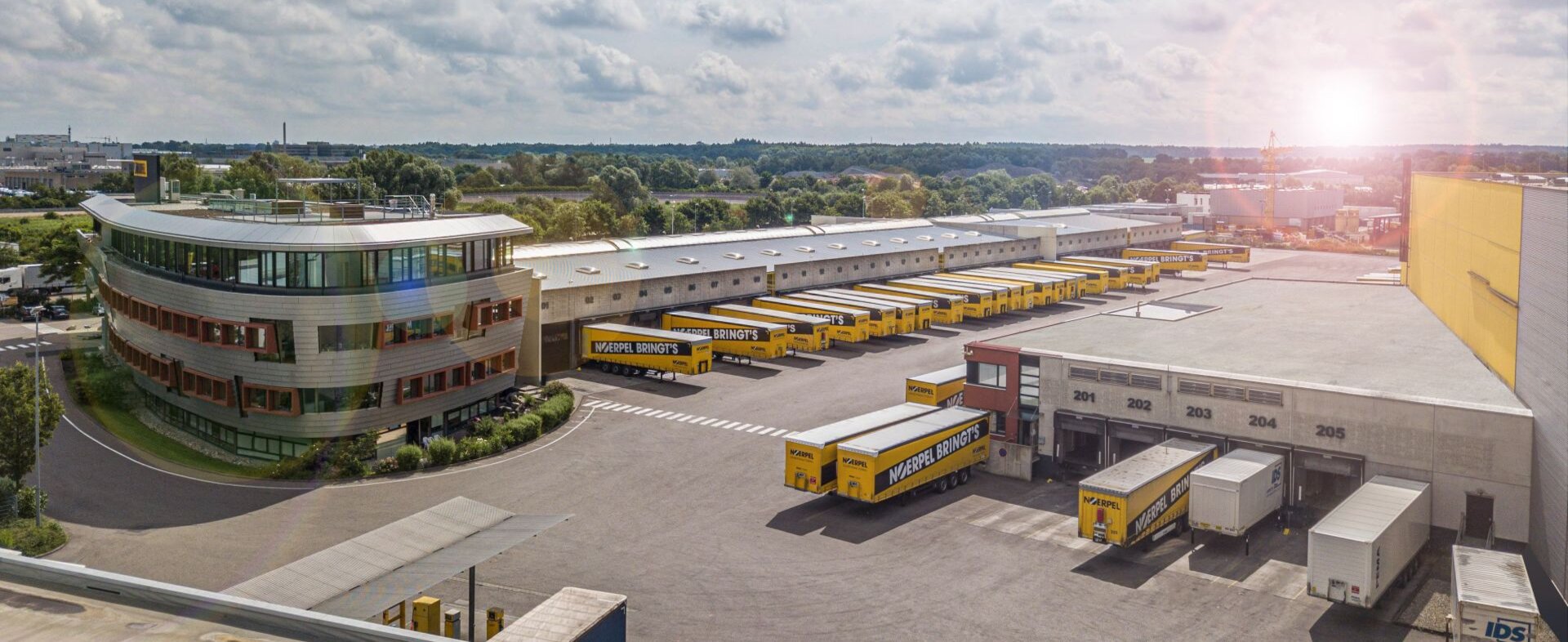
Existing facilities are continuously being optimised to improve energy efficiency and reduce environmental impact. This includes initiatives covering energy consumption, paper usage, and waste management. The majority of Noerpel locations now use 100 per cent green electricity. Photovoltaic systems are being installed in stages, with one new facility commissioned in 2023 and additional installations planned for 2024. The Group has introduced strict internal building standards for new developments, resulting in facilities that require only 40 per cent of the energy consumed by conventional reference buildings.
'As a long-established family-owned business, we prioritise acting with future generations in mind,' said Judith Noerpel-Schneider, Member of the Executive Management Team. 'For us, sustainable supply chain management and responsibility towards the environment and society go hand in hand. We know that this is a long-term journey, but it is a challenge that every company must address.”
Moving Forward Together
In addition to mobility, fleet management, real estate and energy efficiency, Noerpel is focusing on the sustainability potential of its service portfolio. Transport and logistics projects are critically reviewed in close cooperation with customers. ‘Whether through different shipment consolidation strategies, innovative packaging concepts or alternative transport routes, there is often significant optimisation potential, particularly with regard to indirect emissions,’ explained Thomas Hehnle, Managing Director of Sales. Going forward, Noerpel will continue to expand its range of low-emission logistics solutions and bespoke sustainability services for customers.