

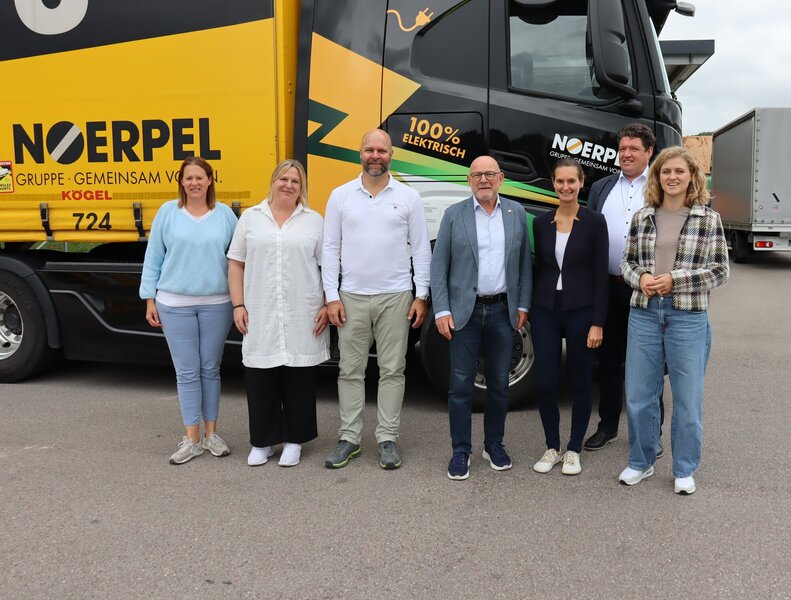
As part of his summer tour, Minister Hermann visited the Noerpel Group’s Heidenheim site in early September. The discussions focused on sustainability, alternative drive technologies, and the political framework required to support climate-friendly logistics. Judith Noerpel-Schneider (Member of the Executive Board), Nico Schneider (Head of Logistics) and Alexa Toberer (Head of Freight Forwarding) hosted the visit.
Alternative drive technologies took centre stage.
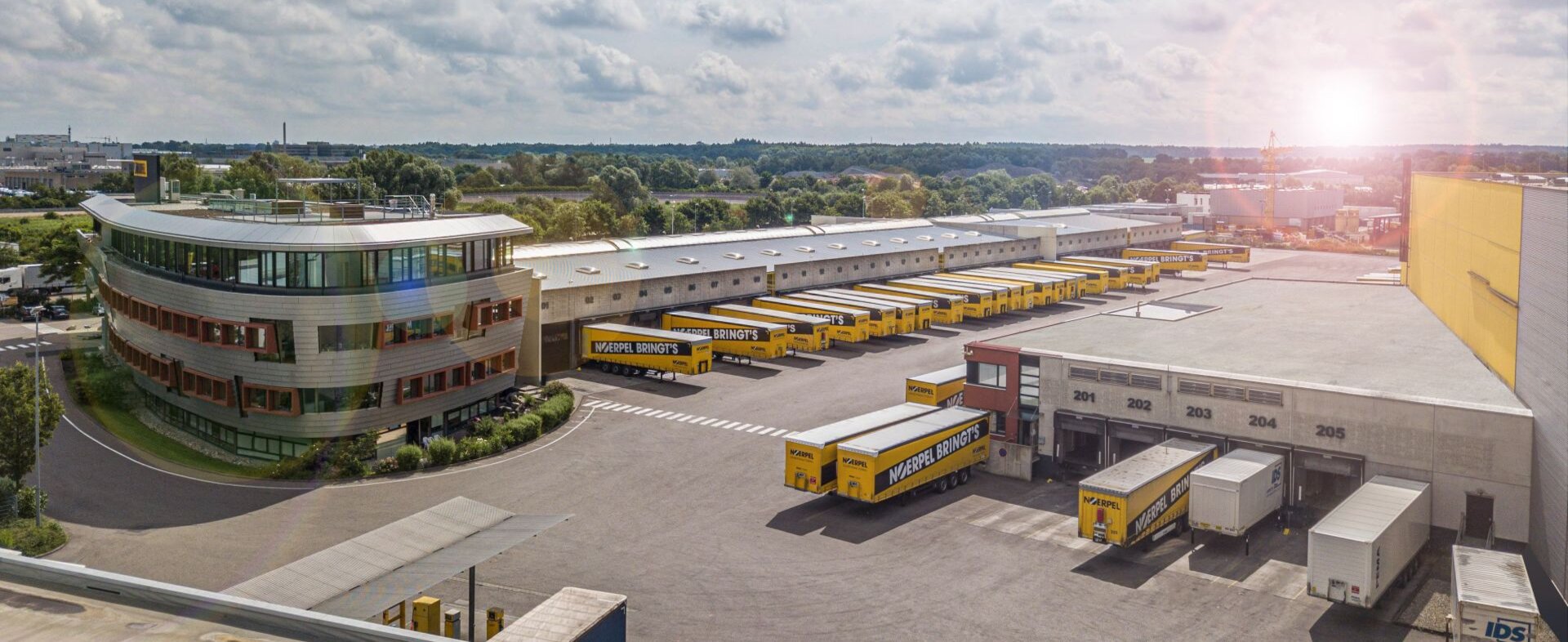
The delegation was welcomed to Noerpel’s 37,600-square-metre logistics centre in Heidenheim (In den Seewiesen). Ms Noerpel-Schneider introduced the company group and outlined key sustainability initiatives. The programme included a discussion on alternative drive technologies, a tour of the logistics facility, and a demonstration of an electric truck.
Climate-neutral transport was a key topic throughout the visit. Noerpel has had consistently positive experiences with electrically powered shunting vehicles used in yard logistics operations. The company is also gaining practical experience in heavy-duty transport and already operates an electric truck at its Ulm headquarters. Although the cost of acquiring electric tractor units has fallen significantly, it remains more than 20 per cent higher than that of conventional vehicles. Furthermore, the development of the necessary charging infrastructure requires substantial investment.
“ ‘Sustainability is a key issue for our industry. Our customers are increasingly requesting climate-neutral transport solutions, and sustainability requirements are now included in almost every tender,” said Judith Noerpel-Schneider.
Electric trucks are preferred, and hydrogen is seen primarily as a solution for industry.
Noerpel has also tested a hydrogen-powered vehicle at its Heidenheim site. During the discussion, Minister Winfried Hermann highlighted the current challenges surrounding hydrogen technology, particularly the development of a comprehensive hydrogen infrastructure and the production of green hydrogen. However, given the rapid progress in battery technology and the significant increase in vehicle range, he believes that battery-electric trucks are set to become the dominant technology. The earlier assumption that electric trucks would be used primarily for short distances while hydrogen would dominate long-haul transport has, in his view, been overtaken by technological developments.
Due to the costs and complexity involved in producing green hydrogen, the transport sector is expected to continue moving towards electrification. “Green hydrogen is a scarce resource and is needed above all in industry. Thanks to advances in range, battery-electric trucks are becoming the standard solution in freight transport,' said Minister Hermann.
A shared path towards climate goals
Company representatives emphasised that the transition to climate-neutral transport can only succeed with the right political support. 'The toll exemption for zero-emission trucks is a positive first step, but it is not enough,' said Judith Noerpel-Schneider. 'Companies need reliable, long-term framework conditions, ranging from funding programmes for charging infrastructure to clear guidelines within tender processes. This also includes clarity on how long the exemption will remain in place, and which infrastructure technologies policymakers intend to prioritise and support in future — whether hydrogen refuelling stations or charging facilities for battery-electric trucks. Only then can companies make investment decisions with the level of planning certainty they require.”
For the Noerpel Group, the minister’s visit provided a valuable opportunity for practical dialogue between business and government. ‘The implementation of the United Nations Sustainable Development Goals (SDGs) can only be achieved through close cooperation between policymakers and industry. That is why this constructive exchange is so important to us, and we would like to thank Minister Hermann for taking the time to visit,” concluded Judith Noerpel-Schneider.